
Wehear - Audiobooks & Stories
STAR READING LIMITEDBooks & Reference
4.647.46K Reviews
- Version
- Varies With Device
- Installs
- 1.00M
- Age Rating
- Teen
Screenshots
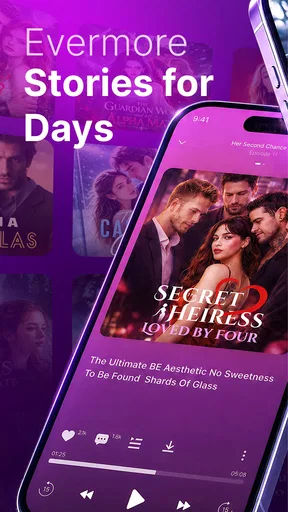



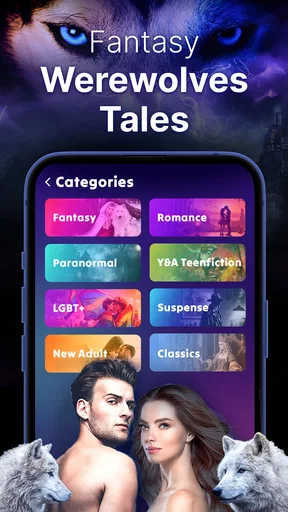

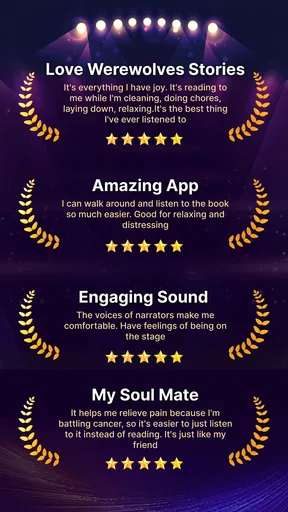
Our Review of Wehear - Audiobooks & Stories
 Analysis by Appyee
I tend to reach for an audiobook when my hands are busy but my mind has room for a story: folding laundry, making a familiar walk, or waiting between errands. Wehear - Audiobooks & Stories is built around that kind of listening. It is a free Books & Reference app from STAR READING LIMITED, focused on spoken fiction and romance stories. Its Teen age rating is worth keeping in mind if a young listener will be using it, and the app also offers in-app purchases, so “free” describes getting started rather than guaranteeing that every listening choice has no cost.
That listening-first approach is also what makes the app worth considering for people who find long stretches of screen reading tiring. It can turn otherwise idle moments into story time, though it is not a replacement for a conventional ebook if you want to scan paragraphs, jump around a page, or read silently. I would think of it as a companion for particular routines, not a universal solution for every kind of reading.
Finding and following stories
I look at this section as a practical guide to getting from “I want a story” to a comfortable listening session without spending the whole break browsing. A useful habit is to decide whether I want familiar romance or something different before opening recommendations, then save just one promising title and test its narration. That keeps discovery intentional and makes it easier to notice whether the story suits me.
Readability and navigation
The opening experience in the published review felt straightforward: the library was organized, browsing by genre was easy to understand, and recommendations offered a route into stories when I did not already know what I wanted. That matters in an audio app, because choosing a book is often the main task before listening can begin. A shelf of options is useful only if it helps you make a decision without turning a short break into a long search.
For a more deliberate first session, I’d browse a genre that already appeals to me, save a promising title to a playlist, and start listening before adding several more. That small workflow gives a new user a chance to judge the narrator and storytelling style before building a queue. Recommendations can help with discovery, but I would treat them as suggestions rather than a substitute for checking whether a particular story suits my mood.
The app’s stated audience is especially clear in its emphasis on romance and love-story listening. Readers who want that kind of serialized, emotionally driven fiction may find browsing more rewarding than someone arriving for a broad reference collection or a mix dominated by nonfiction. The developer is STAR READING LIMITED, and the title’s average rating is 4.6 from around 190,000 ratings, a useful sign of substantial audience interest, though not a guarantee that its catalog will match your taste.
Motor and sensory considerations
Listening can reduce the need to hold a device or repeatedly look at a screen, which is helpful when reading text is uncomfortable or when a person’s hands are occupied. Playback speed adjustment is also a practical choice rather than a novelty: a listener can slow narration when following a complicated scene or speed it up when revisiting familiar material. I would avoid treating faster playback as automatically better; dialogue, accents, and emotional pauses can become harder to follow when the pace is pushed too far.
Audio has its own sensory demands. Narration may be tiring in a noisy room, and a voice that one listener finds engaging may feel too expressive or distracting to another. Before committing to a long session, I’d try a short passage at a comfortable volume and pace. That is a simple way to decide whether the narrator works for me without assuming that every title has the same performance style.
There is a useful trade-off here for people who switch between listening and reading. A spoken story works well while doing a repetitive task, but it is less convenient than text when I want to locate a name, reread a sentence, or skim to a specific passage. If those actions are central to how you enjoy books, an ebook reader or a print copy may be a better fit; Wehear makes more sense when uninterrupted listening is the goal.
Situational access
Offline downloads are most valuable when planned ahead. I’d choose a title while connected, download it before leaving home, and then test playback before heading somewhere with unreliable service. That avoids discovering at the start of a trip that the book I meant to hear is not ready. It can also help keep mobile data use down, although downloads still take device storage, so I would remove finished audio when space becomes tight.
A realistic routine might be a commute with one story already queued, followed by a few minutes of listening while preparing dinner. Playlists can help separate “next up” choices from titles I want to remember, rather than making every listening session begin with fresh browsing. The review experience also describes syncing across a phone and tablet, which is useful for someone who listens on one device away from home and another later. I would still check that the app has retained my place before settling in, especially after switching devices.
For people who cannot safely look at a screen while moving, the strongest use case is starting the story before the activity begins and leaving the device alone. I would not browse or change playback while driving, cycling, or crossing streets. The app can make a routine more hands-free once audio is playing, but it does not make every situation safe for interaction.
Remaining barriers and everyday trade-offs
Discovery is enjoyable when recommendations land, but personalization can also narrow what appears prominent. If the home screen keeps steering me toward similar stories, I’d deliberately browse another genre rather than assume the first row represents the whole library. This is a useful habit in any recommendation-led catalog: use suggestions to find a starting point, then take control of the search when your interests change.
Another decision is whether to listen casually or build a listening habit. For casual use, I’d pick a single title and see how it fits into a week before spending money or organizing a large queue. The app is free to install, but in-app purchases range from $0.49 to $199.99 per item, so I would check the price attached to any purchase before confirming it. That range makes it sensible to treat paid options as a separate choice, not as an assumed part of ordinary listening.
The catalog’s focus is a strength for listeners seeking romance and love stories, but it may be a limitation for someone looking mainly for textbooks, practical reference material, or a wide nonfiction selection. With more than one million installs, Wehear has clearly found an audience, yet popularity alone cannot answer the personal question that matters: whether its available stories and narration suit the listener. I would skip it if I rarely enjoy audio, need a broad reference library, or prefer to browse and quote exact passages.
Who will get the most from it
I’d recommend trying the app if you enjoy romance fiction, want a story during routine tasks, or find listening easier than keeping your eyes on a page. It may also suit someone who has a regular commute and prefers to choose a story in advance rather than scroll through entertainment options every day. The most useful test is not a long marathon: listen to a short sample of a title you genuinely want, then see whether its voice and pacing remain comfortable after the novelty wears off.
It is less compelling for readers who want complete control over text layout, frequent searching within a book, or a quiet activity that does not require sound. People who already use a general audiobook service may also prefer to keep their library in one place, especially if they are not specifically looking for Wehear’s romance-led focus. In that comparison, broader audiobook platforms can be a better choice for varied genres, while ebooks or print are better for skimming, studying, and rereading exact passages.
There is also a practical difference between a phone and a tablet. A phone is convenient for a walk or commute, while a tablet may be easier to browse at home, but listening itself does not require a larger display. If I were setting this up for someone who finds small controls difficult, I’d do the browsing and download preparation together first, then leave a chosen story ready to play. That reduces the amount of screen navigation needed during the actual listening session without assuming any particular accessibility setting.
Wehear was released on September 21, 2020, and has a Teen content rating. Those details help set expectations about the app’s history and intended age guidance, but I would still use my own judgment about whether an individual story is appropriate for a particular listener. For a household, it is better to review a title together than to assume the app’s overall age label describes every story in the same way.
An inclusive verdict
In my experience, the clearest benefit is that Wehear makes stories easier to fit around hands-busy parts of the day, with downloads, playlists, speed control, and device syncing supporting different listening routines. Its usefulness for different abilities depends on the listener, the narrator, the surrounding noise, and comfort with audio. I would call it a convenient option for romance and story fans, not a complete accessibility answer or a substitute for every reading format.
Have you ever found yourself longing for a good story but just didn’t have the time to sit down with a book? Well, let me introduce you to this app. It’s like having a library in your pocket, and trust me, it's a game-changer for anyone who loves diving into captivating tales.
Exploring the Library
Upon opening the app, you’re greeted with a beautifully organized library. It’s like stepping into a well-curated bookstore, minus the dusty shelves. You can browse by genre or check out the latest recommendations, which are updated frequently to keep things fresh. I was like a kid in a candy store!
What I found particularly useful is the app’s personalized recommendations. It’s as if the app gets to know your taste over time, offering up stories that are right up your alley. I’ve discovered so many hidden gems this way.
Listening Experience
Now, let’s talk about the actual listening experience. The narrators on the app are top-notch, bringing stories to life with their engaging voices. You can easily adjust the playback speed if you're in a rush or want to slow things down to savor every word.
The audio quality is crisp, and the transitions between chapters are smooth, making for an uninterrupted listening session. I often found myself getting lost in stories during my commutes, and it made the journeys much more enjoyable.
Features That Make a Difference
One of the standout features of the app is its offline listening capability. You can download audiobooks to your device and listen without worrying about data usage. This is especially handy for long trips or when you’re stuck without internet access.
The app also allows you to create playlists of your favorite stories. It’s a simple feature, but it’s incredibly convenient for organizing what you want to listen to next. Plus, the app syncs across devices, so you can pick up right where you left off, whether you’re on your phone or tablet.
User-Friendly Design
The design of the app is intuitive and user-friendly. Even if you’re not tech-savvy, you’ll find navigating the app a breeze. The developers have clearly put a lot of thought into ensuring the app is accessible to everyone.
There are no overwhelming menus or complicated settings. Everything is laid out logically, and you can easily find what you’re looking for with minimal fuss. It’s the perfect example of form meeting function.
Conclusion
In a world where time is often limited, the app offers a convenient way to enjoy literature on the go. With its library, narration, and user-friendly design, it has become my go-to app for audiobooks.
If you’re an avid reader or just someone looking to explore new stories, give it a try. It might just become your new favorite app too. So grab your headphones, press play, and let the stories begin!
Verdict
Strengths of Wehear - Audiobooks & Stories
- Wide variety of genres available.
- User-friendly interface design.
- Offline listening feature.
- High-quality audio narration.
- Regularly updated content library.
Limitations of Wehear - Audiobooks & Stories
- Requires internet for initial download.
- Ads can be intrusive at times.
- Limited free content options.
- Account creation is mandatory.
- Some navigation issues reported.
Other Releases by STAR READING LIMITED
View All
DailyStory - Stories & Dramas
Books & Reference4.4
Similar Picks in This Category
View All
Google Play Books & Audiobooks
Google LLC4.7

네이버 - NAVER
NAVER Corp.3.5

Wattpad - Read & Write Stories
Wattpad.com3.7

King James Bible - Verse+Audio
Ozion4.8

Bible Offline-KJV Holy Bible
Bíblia Offline4.9

Amazon Kindle: Reading App
Amazon Mobile LLC4.8
Frequently Asked Questions
What types of content does Wehear offer?
Wehear provides a diverse range of audiobooks and stories across various genres such as mystery, romance, science fiction, and self-help. Whether you're looking for classic literature or the latest bestsellers, Wehear has something to suit your taste. Additionally, original content and exclusive stories are also available, ensuring a unique listening experience.
Is Wehear free to use?
Wehear offers both free and premium content. Users can access a selection of audiobooks and stories at no cost, but for full access to the entire library and exclusive features, a subscription is required. The app often provides a trial period for new users to explore its premium offerings before committing to a subscription.
Can I download audiobooks for offline listening?
Yes, Wehear allows users to download audiobooks and stories for offline listening. This feature is particularly useful for those who want to enjoy their favorite content on the go without relying on a stable internet connection. Simply download the desired audiobooks to your device and listen at your convenience.
What devices support the Wehear app?
Wehear is compatible with both Android and iOS devices. Users can download the app from the Google Play Store or Apple App Store, ensuring a seamless experience across smartphones and tablets. The app is designed to provide an intuitive user interface that caters to both platforms efficiently.
How often is new content added to Wehear?
Wehear regularly updates its library with new audiobooks and stories. The frequency of updates ensures that users always have fresh content to explore. Subscribers can expect new releases in various genres, along with exclusive series and original productions, keeping the listening experience exciting and up-to-date.
